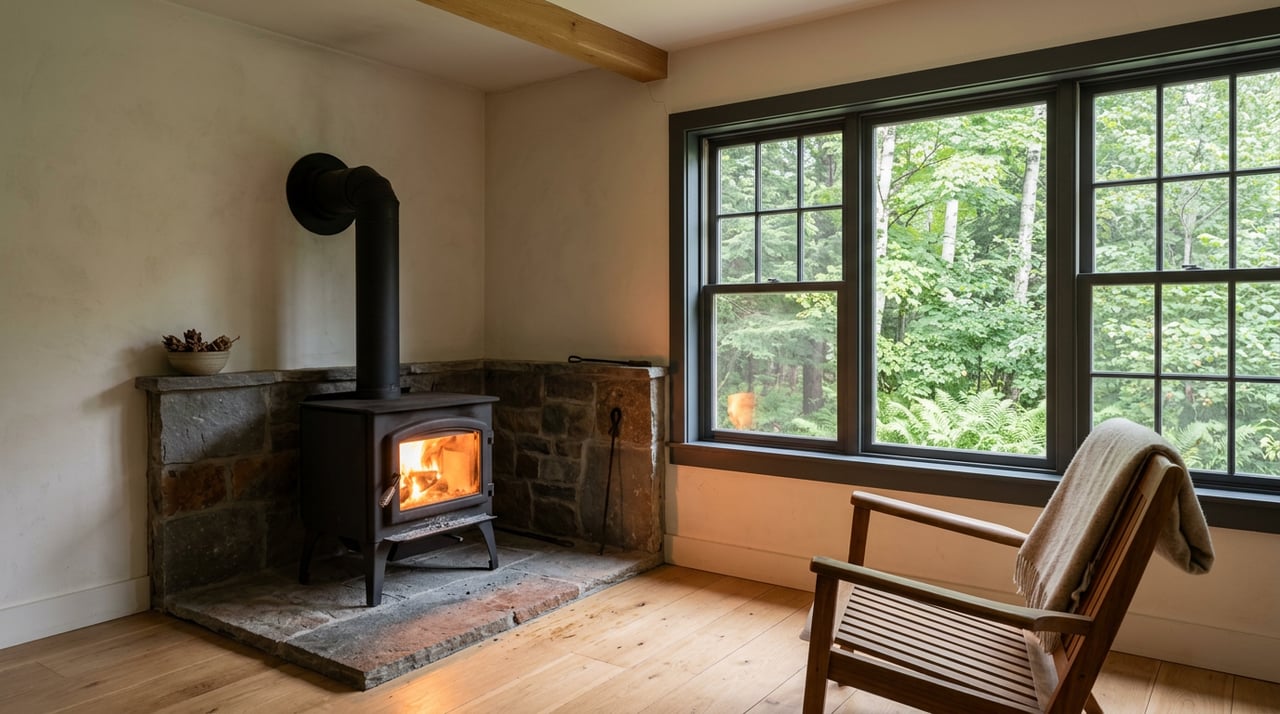
A three-bedroom cape tucked into Eastman's hardwood interior and a shingled home with frontage on Eastman Lake can close in the same week and land on the identical bill from the Eastman Community Association. Different price, different view, different everything except the one number that shows up every spring: the annual assessment. For the fiscal year running April 2025 through March 2026, the Eastman Community Association set that figure at $4,364 for any developed home or condo, full stop, regardless of what the county says the property is worth.
That flat structure is the detail buyers researching Grantham real estate almost never see coming, because it doesn't show up on a portal listing. It shows up in the resale packet, usually after an offer is already in motion. Understanding how it works, and what it stacks on top of, changes what "affordable" actually means depending on which corner of Eastman you're looking at.
To be clear, the two homes in that opening scenario are illustrative, not a real pair of listings. The point is the mechanism: the assessment doesn't ask what the county thinks your home is worth before it bills you.
What the flat fee actually buys
Eastman's assessment funds the Universal Amenity Program, which bundles access to a two-mile lake with six beaches, an 18-hole golf course, tennis and pickleball courts, an indoor pool, a fitness center, and miles of groomed cross-country ski and hiking trails spread across the community's roughly 3,600 wooded acres in Grantham, Enfield, and Springfield, built around a 335-acre lake. Owners who already pay the annual assessment have UAP included and receive 14 one-day guest passes for visitors. That's a genuinely broad amenity package for one line item, and it's a real part of why people choose Eastman over a standalone lot elsewhere in Grantham.
The catch is in how that one line item is calculated. It isn't a percentage of value, a mill rate, or anything tied to what you paid. It's a per-unit charge that the ECA Board sets each year, and it lands the same whether the deed says $450,000 or $1.5 million.
The math that changes what "carrying cost" means
Run that fixed number against two illustrative price points and the pattern is stark. On a $450,000 interior home, a $4,364 annual assessment adds close to 1 percent to your yearly carrying cost before you've paid a dollar of property tax. On a $1.5 million lakefront or golf-course property, the identical $4,364 bill adds under 0.3 percent. Same amenities, same governance, same guest passes. The buyer at the lower price point is carrying proportionally three to four times more amenity cost for access to the same lake and the same golf course.
That's the part worth sitting with before you write an offer. A listing that looks like the "budget option" inside Eastman may actually carry a heavier relative amenity load than the estate two roads over, once you account for what the flat assessment does to a smaller purchase price.
What you actually owe, and when
The ECA publishes its current fee schedule directly, and the figures below reflect what's in effect for FYE2026, the fiscal year running April 2025 through March 2026.
| Item | FYE2026 Amount | When It's Due |
|---|---|---|
| ECA membership fee, house or condo | $7,000 | Typically due at closing |
| ECA membership fee, vacant lot | $1,500 at purchase, $5,500 at construction start | Staged in two payments |
| Annual ECA assessment, house or condo | $4,364 | Billed annually |
| Annual ECA assessment, vacant lot | $3,717 | Billed annually |
| Monthly payment plan surcharge | 7.5% APR | If you elect monthly billing instead of annual or semi-annual |
| UAP add-on for non-included users | $299 per household | Optional, situational |
Buying a lot instead of a finished home lowers the annual number modestly, from $4,364 to $3,717, but it doesn't eliminate the membership fee. It just spreads it out, with $1,500 due at purchase and the remaining $5,500 triggered when you break ground. That staging is easy to miss if you're comparing a lot's sticker price to a finished home's sticker price without pricing in what comes due later.
Three more bills the ECA number doesn't include
The annual assessment is the headline figure, but it isn't the whole carrying cost for every kind of Eastman property.
- Condo dues. Several condominium associations operate independently inside Eastman, each with its own monthly dues, reserve study, and budget, layered on top of the ECA assessment rather than instead of it. A condo buyer is really underwriting two separate fee structures at once.
- Water and sewer. Utilities inside Eastman are billed by the Village District of Eastman, a governing body separate from the ECA. VDE charges include a precinct component plus usage-based fees, and they are not part of the amenity assessment at all.
- Golf. The Universal Amenity Program covers practice facilities, but actual rounds and full memberships run through Eastman Golf Links on their own fee schedule. If you plan to play regularly, that's a cost the flat assessment doesn't touch.
The paperwork that turns a flat fee into a known one
None of this is disqualifying. It's just easy to underprice if you're reading a listing the way you'd read one anywhere else in the Upper Valley. Before an offer goes in on an Eastman property, it's worth requesting a short stack of documents that most sellers can produce quickly:
- The current ECA resale or estoppel letter confirming the fiscal year, the exact assessment, and whether the buyer or seller is covering the closing fee
- The condo association's operating budget, reserve study, and recent meeting minutes, if the property is a condo
- Any Environmental Control Committee approvals or restrictions on file, particularly if you're planning an addition, a driveway change, or an ADU, since ECC review governs exterior projects across the community
- Current Village District of Eastman rates if you want a real monthly utility number rather than an estimate
Grantham's tax bill is a separate line entirely
It helps to keep the ECA assessment mentally separate from what the town of Grantham bills. In the town's most recently published assessing update, for 2024, Grantham's equalization ratio stood at 73.2 percent, meaning assessed values across town were running below current market value by roughly that margin, and properties inside the Village District of Eastman carried a combined municipal, county, school, and village rate of $22.13 per $1,000 of assessed value. Neither of those figures has anything to do with the ECA. The town bills through one set of statutes and one office, the ECA bills through its own board and its own fiscal year, and a buyer comparing two Eastman properties needs to look at both bills, not just one.
Quick answers to the questions this raises
Does the ECA assessment change based on what I paid for the home? No. It's a flat per-unit charge for developed property, set annually by the ECA Board, regardless of purchase price or assessed value.
Can I avoid the fee structure by buying a vacant lot instead of a finished home? You lower the annual number from $4,364 to $3,717, but you take on a staged membership fee instead, with money due at purchase and more due when construction starts.
Is the Eastman amenity fee the same thing as my Grantham property tax bill? No. The ECA assessment funds the Universal Amenity Program and is billed by the Association, while Grantham's municipal, county, school, and village district taxes are billed separately by the town, most recently at a combined Village District of Eastman rate of $22.13 per $1,000 in the town's 2024 assessing update.
The number that belongs in your offer strategy isn't the sale price alone. It's the sale price measured against a fee that doesn't move with it. That's the comparison a listing sheet won't make for you, and it's the one that actually tells you what you're buying into.
If you're weighing a specific Eastman property against the numbers here, or trying to figure out how a particular listing's carrying costs compare across the community, Andy Clouse can walk through the resale documents with you before you write the offer. Let's Connect.