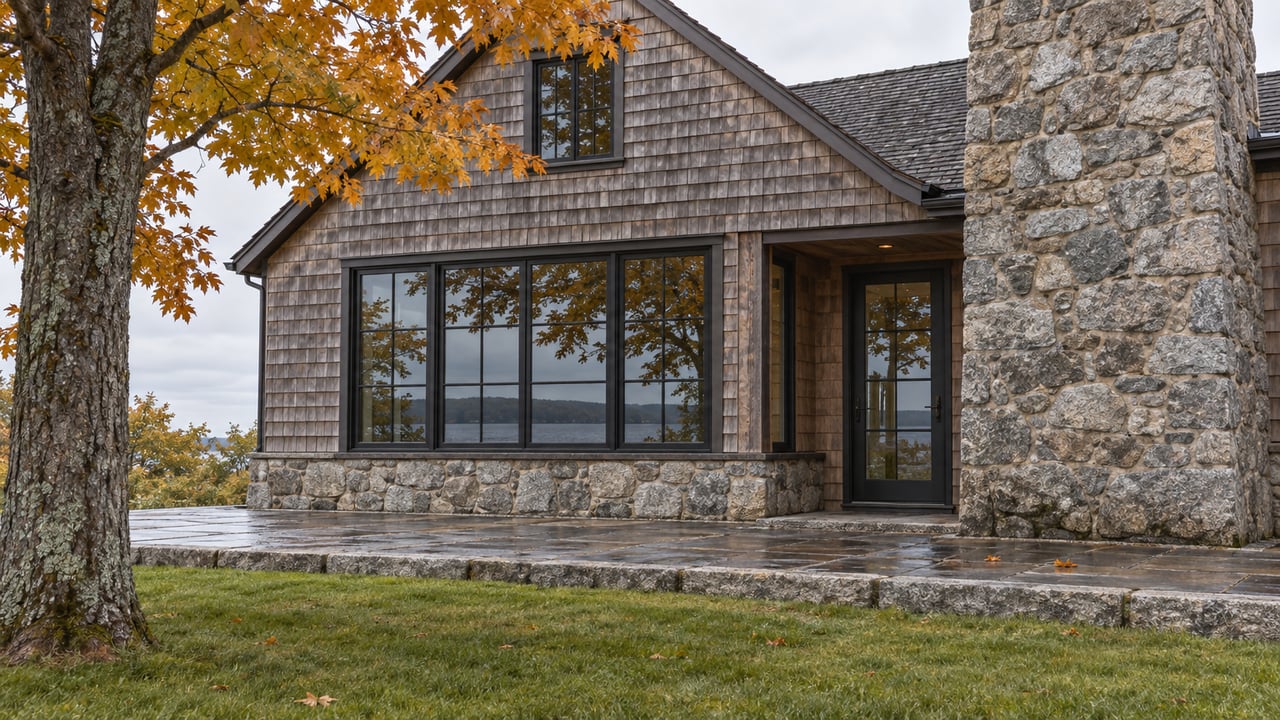
New London holds two lakes inside one town line. Lake Sunapee is the water most people picture when they hear the region's name. Pleasant Lake sits closer to the village center, near Elkins, over 600 acres with no jet skis allowed and water clean enough to be classified oligotrophic. For years, buyers who wanted the Lake Sunapee lifestyle without the Lake Sunapee price found their workaround at Pleasant Lake: comparable boating, comparable proximity to town, a noticeably lower number on the price tag.
That workaround got harder to count on this year. In March 2026, New London's Board of Selectmen heard directly from Chief Assessor Kris McAllister that Pleasant Lake values were climbing fast enough to distort the town's sales-ratio study, and that prices there are now nearing Lake Sunapee levels. That is not a listing agent's read of the market. That is the town's own assessor, in public meeting minutes, describing a gap closing in real time.
What the Assessor Actually Told the Board
New Hampshire towns keep an official assessed value on every property, but those values can lag the market. In the years between resets, the state calculates an equalization ratio each year by comparing assessed values to actual sale prices, which ties the old assessment back to what the market is currently doing. The March 2026 Board of Selectmen meeting minutes put New London's estimated ratio this year at 79 percent, well below the state's normal guideline of 90 to 110 percent. A ratio that low means assessed values across town are running behind actual sale prices, and behind by more than a typical off-year would produce.
McAllister pointed to a specific driver: Pleasant Lake sales appreciating quickly enough to pull the whole town's ratio down, since those prices are rising faster than the assessments reflect and faster than most of the rest of town, including Sunapee frontage that has already spent years catching up to its own market value. New London's next full revaluation is not scheduled until 2028. Sunapee, which shares an assessor with New London under a tri-town agreement, is on the same 2028 timeline. Newbury, the third town in that arrangement, follows in 2029. Until one of those resets lands, the town relies on the equalization ratio and periodic inspections of properties that changed without a permit, rather than a wholesale recalculation.
Why Pleasant Lake Started Closing the Gap
Pleasant Lake sits close enough to walk to Main Street and Colby-Sawyer College, with New London Hospital about five miles away, all inside a town that carries more year-round infrastructure than a lake-only address. The lake itself has a round shape suited to water skiing, wakeboarding, and sailing, a no-jet-ski rule that keeps the water quieter, and inventory tight enough that buyers typically find around ten homes on the market at any given time. As Lake Sunapee frontage keeps getting scarcer and more expensive, some of that demand has nowhere to go but the next best water in the same town.
New London, Sunapee, and Newbury each carry a different reputation inside the same lake region. New London offers the most day to day infrastructure: dining, shopping, a hospital, a college campus anchoring the center of town. Sunapee's waterfront is closer to the lake town identity most people picture first. Newbury tends to price lower than either. Pleasant Lake buyers are not just buying a quieter lake. They are buying New London's infrastructure at what used to be a lower price than the town's other lake, and that pricing gap is the part the assessor says is narrowing.
Where the Tax Dollar Actually Goes
Whichever lake a buyer chooses, the same rate structure applies once the deed records. New London's 2025 total tax rate came to $11.86 per $1,000 of assessed value, built from four pieces: local education at $5.03, town operations at $3.71, county at $1.98, and the state education tax at $1.14. Local education alone accounts for roughly 42 percent of every dollar collected, more than any other single piece.
That breakdown matters here because a revaluation does not change a buyer's purchase price. It changes the number the tax rate gets multiplied against. If Pleasant Lake's assessed values are lagging its sale prices more than Sunapee's are, as the assessor's comments suggest, the 2028 revaluation has more room to move on Pleasant Lake than on Sunapee frontage that has already largely caught up. Buyers who purchase now, ahead of that reset, are not locking in a permanently lower tax bill. They are buying at today's assessment with a multi-year window before the number resets to match wherever the sale prices land.
The Timing Problem for Anyone Comparing the Two Right Now
A buyer who pulls up an assessed value on a Pleasant Lake listing and compares it to an assessed value on a Sunapee listing is comparing two numbers that are stale by different amounts. If Pleasant Lake's actual closed sale prices are running further ahead of its assessment than Sunapee's are, the apparent discount on paper is partly an artifact of assessment lag rather than a true difference in what a buyer will pay at closing.
That gap has room to widen before it corrects, since the next town-wide reset does not arrive until 2028. Buyers who purchase on Pleasant Lake in the years leading up to that revaluation could see a larger one-time jump in their assessed value, and therefore their tax bill, than buyers who bought Sunapee frontage where the number is already closer to true market value. Neither outcome shows up by comparing two assessed values side by side. It shows up by asking a different question: what did comparable properties on this specific lake actually close for in the past twelve months, and when was this property last inspected or reassessed. Those two answers tell a buyer more about real cost than the number printed on the town's assessment card.
What This Means If You're Weighing the Two Lakes
Both lakes have their own character and their own set of buyers who prefer them, and neither is a lesser version of the other. Sunapee frontage carries more of the region's name recognition and a longer track record of assessed value tracking sale price. Pleasant Lake offers a quieter, no-jet-ski setting closer to the center of town, with a lake character that a lot of buyers actively choose rather than settle for. The decision worth making carefully is not which lake is cheaper. It is whether the price you are comparing reflects what the property will actually cost you to carry once the next revaluation catches up to what buyers are already paying.
Quick Answers
Is Pleasant Lake still less expensive than Lake Sunapee waterfront? On paper, comparing assessed values, it can still look that way. The assessor's own comments to the Board of Selectmen suggest actual sale prices are closing that gap faster than the assessed values show. The only way to know for a specific property is to compare recent closed sales rather than assessment numbers.
When will assessed values catch up to what buyers are actually paying? Not until New London's next full revaluation, scheduled for 2028, the same year Sunapee resets. Until then, the town relies on the annual equalization ratio, estimated at 79 percent this year, to translate between assessed and market value.
Does buying below market value on paper mean a lower tax bill? It means a lower bill for now, based on the current assessment and whatever rate the state confirms each fall. It is not a permanent advantage. It is a preview of where the bill is likely to land once the next revaluation catches the assessment up to the sale price.
If you're trying to figure out what a specific property on either lake is actually worth right now, not what an assessment card from a few years ago suggests, Let's Connect. Andy Clouse tracks both lakes closely enough to tell you which number to trust.
This article is general information, not legal, tax or financial advice. Consult a qualified professional about your situation.