Thinking about tying up your boat on Lake Sunapee and wondering what it takes to manage a dock or mooring through the seasons? If you are buying from out of state or eyeing a second home, the details can feel complex. You want safe, simple lake access in summer and a plan that protects your investment in winter. In this guide, you will learn the dock and mooring options that work on an icy lake, how permits and local rules fit together, what ice-out means for your calendar, and a buyer’s checklist to use before you make an offer. Let’s dive in.
Dock types for an icy lake
Floating seasonal docks
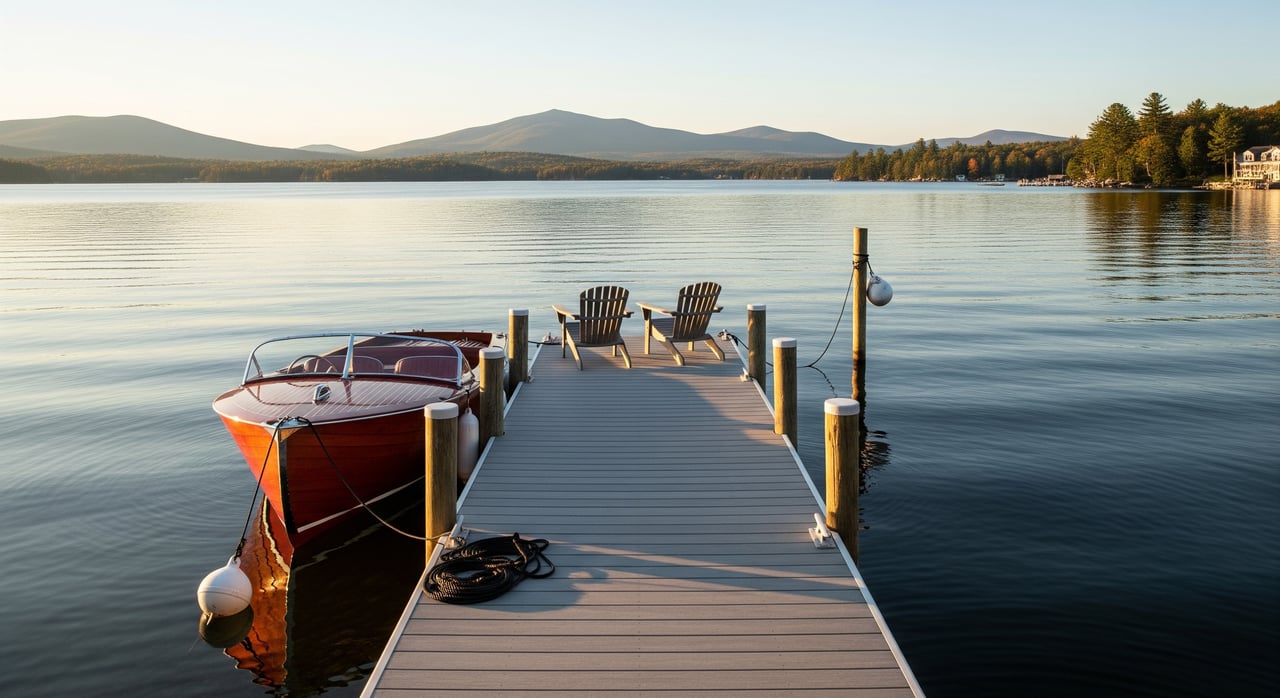
A floating seasonal dock is the most common choice on Lake Sunapee. You install it in spring and remove it before freeze to avoid ice damage. It handles variable water levels well and tends to be easier to service over time.
- Pros: easier removal, adaptable to water level changes, modular sections
- Cons: annual remove and reinstall, hardware and floats wear over time
- Best fit: properties where winter removal is practical and permitted
Permanent floating docks
A permanent floating system can offer year-round access if it is engineered for ice and permitted. On lakes with heavy ice movement, this option is less common. You should confirm design, permits, and local guidance before considering this route.
- Pros: less annual labor, consistent access
- Cons: higher risk from ice without special engineering, limited by local rules
- Best fit: only where regulations and site conditions support it
Pile-supported docks
Pile or pier docks driven into the lakebed provide a stable platform. They are more complex to install and can face ice pressure. Permitting and professional installation are typically required.
- Pros: stable in waves, durable structure
- Cons: vulnerable to ice forces, higher cost and permitting needs
- Best fit: specific sites where a permanent structure is necessary and approved
Gangway plus floating section
A fixed or semi-fixed gangway leading to a removable floating dock is a practical middle ground. You can remove the floating portion seasonally and secure the gangway for winter.
- Pros: flexible and familiar setup for Sunapee
- Cons: still requires seasonal planning and winter protections
- Best fit: shorelines where a short gangway improves access to deeper water
Roll-in or portable systems
For gradual shorelines, portable roll-in sections or beachable walkways can minimize permanent hardware. These work best in shallow zones and require hands-on seasonal work.
- Pros: minimal in-water structure, simpler permitting in some cases
- Cons: limited by depth and slope, manual effort each season
- Best fit: shallow, gradual approaches with easy on-site storage
Materials and build details that matter
On an icy lake, design and materials are critical. Look for composite or rot-resistant decking, HDPE floats, and galvanized or stainless hardware. Hinge points and connections need to tolerate movement, and your site should allow safe access for trucks or cranes during installation and removal.
Moorings and everyday logistics
Common mooring types
Most private owners use a swing mooring with a single anchor and chain that lets the boat swing with wind and current. Pile moorings are less common where ice can stress pilings. You can also explore marina slips, either seasonal or annual, or shared association moorings.
Ownership and assignment
Mooring rights vary. Some properties include a deeded, transferable mooring location. Others rely on town-issued permits within a mooring field or an association’s assignment rules. Marina slips are separate contracts and are not part of a home sale unless explicitly transferred.
Placement and maintenance
Placement depends on depth, bottom type, boat size, navigation channels, and prevailing winds. Local harbormasters regulate spacing and placement to protect navigation. Plan for seasonal inspection, appropriate anchor gear for Sunapee conditions, and annual renewal where required.
Alternatives for access
If a private mooring is not available, you can pursue a town-permitted mooring field spot, an association assignment, or a marina slip. Ask about waiting lists and the exact transfer process before you commit to a property that lacks established rights.
Permits and who to contact
Key authorities and stakeholders
- New Hampshire Department of Environmental Services (NHDES), Wetlands Bureau and Shoreland rules: state-level oversight for in-water work, shoreline changes, and structures.
- Town of Sunapee Harbormaster and Town Office: local mooring permits, harbor rules, season dates, and placement maps.
- Lake Sunapee Protective Association (LSPA): local stewardship, lake-use guidance, and historical ice-out records.
- U.S. Army Corps of Engineers: federal permits in specific cases.
- Homeowners or condo associations: rules for shared docks and moorings.
What to verify before you change anything
- Whether your proposed dock or mooring is exempt, needs notification, or requires a permit with conditions.
- Whether a mooring number or dock right is deeded and transferable.
- Local harbor rules for season dates, spacing, boat size limits, and placement.
- Any HOA or lake-association restrictions.
- Setbacks, vegetation buffers, and shoreland zoning that affect gangways or ramps.
Ice-out and the seasonal calendar
What ice-out means on Lake Sunapee
Ice-out marks the point when the lake is free of continuous ice. On Lake Sunapee, local observers and LSPA track this annually. Timing varies year to year, which affects when docks and moorings can safely go back in the water.
A typical seasonal rhythm
- Late winter to early spring: watch local ice-out reporting to plan installation. The harbormaster may announce opening dates and placement windows.
- Spring: reinstall floating docks and place moorings once conditions and dates allow.
- Summer: enjoy full use and perform routine checks on connections and gear.
- Fall: remove docks and haul boats before freeze. Winterize engines and systems.
Always align with Town of Sunapee guidance, permit conditions, and professional contractor advice.
Insurance and liability
Ice can crush floats and bend hardware. Ask sellers about any past insurance claims for dock or boat damage. Some town or association rules may require proof of coverage for mooring permits. Discuss dock, mooring, and watercraft coverage with your insurer before closing.
Buyer checklist for waterfront or shared access
Documents to request
- Deed and current survey showing shoreline boundaries and any recorded dock or mooring rights.
- HOA or association bylaws and rules for shared docks or moorings.
- Past permits, approvals, or correspondence with the harbormaster or NHDES.
- Contractor designs, invoices, and service history for existing docks.
On-site and technical checks
- Depth and bottom-type information where a mooring or dock would sit.
- Access for installation: road, driveway, and crane or truck staging.
- Evidence of winterization and local storage options.
- Shoreline condition, including erosion and vegetation buffers.
Questions to ask early
- Is there a permitted dock or other in-water structure, and is the permit transferable?
- Is there an assigned mooring for this property? Is it private, shared, or town-issued? How is it transferred?
- Who handles seasonal install and removal now, and can those services continue for a new owner?
- What are typical ice-out dates and the earliest reinstallation windows the harbormaster allows?
- Are there any pending violations or rules under review that could affect docks or moorings?
Costs and scheduling
- Expect wide cost ranges driven by design, materials, rigging needs, permitting, and access.
- Spring and fall calendars fill quickly for marine contractors. Build lead times and permit steps into your offer timeline and closing date.
Smart moves for common scenarios
- Property with deeded and transferable rights: confirm documents, get the transfer steps in writing, and verify with the harbormaster.
- Informal or neighbor-managed setup: seek written confirmation from the HOA or neighbors about long-term use rights and understand the risks.
- No existing mooring or dock: ask the harbormaster about mooring field availability or waiting lists and explore marina slip options before committing.
Buying on Lake Sunapee should feel exciting, not uncertain. With the right plan for docks and moorings, you can step into summer with confidence and protect your shoreline investment through winter. If you want local guidance, permit clarity, and a practical plan tailored to your goals, connect with Andy Clouse to map your next steps.
FAQs
How do docks work on Lake Sunapee with winter ice?
- Most owners use removable floating docks and take them out before freeze to avoid ice damage. Permanent options require special engineering and permits.
Who issues mooring permits in Sunapee, NH?
- The Town of Sunapee Harbormaster administers local mooring permits, placement, and season dates, while state and federal agencies oversee environmental aspects.
When can I reinstall my dock after winter on Lake Sunapee?
- Timing follows ice-out and local guidance. Reinstall after the harbormaster indicates conditions and dates are safe and permitted.
Are mooring rights included when I buy a Sunapee waterfront home?
- Sometimes. Rights may be deeded, town-assigned, or association-managed. Always confirm in the deed and with the harbormaster before closing.
Do I need a state permit for a small seasonal dock?
- Possibly. Some small seasonal docks may be exempt under certain conditions, but rules change. Confirm with NHDES and the Town of Sunapee.